Face
You Only Live TwiceFace is a form of social standing that gives seemingly minor gestures real weight in You Only Live Twice. Through James Bond’s encounters with Tiger Tanaka, the novel presents face as something that can be gained through a public display, put at risk by defeat, and protected by observing the expectations attached to a relationship. It is not merely personal pride: it affects how a host treats a guest, how a friendship is maintained, and how an intelligence negotiation can proceed.
Social Standing and Public Conduct
The idea first appears in an intimate party scene. After James Bond drinks sake in conspicuously large quantities, Tiger Tanaka tells him that Grey Pearl considers him an eight-flask man. Tiger describes the feat as a source of gained face, comparing Bond’s capacity to that of sumo wrestlers. The detail makes standing visible through a bodily performance witnessed and assessed by others: Bond’s drinking is not just indulgence, but a public display that earns recognition in the room.
That recognition has limits. Tiger adds that Bond may not prove a suitable companion for Trembling Leaf later in the evening, so the display earns admiration without guaranteeing success in every social situation. The exchange shows face being negotiated through an audience’s judgment, teasing, and comparison. Bond’s own irreverent manner—his jokes about sake, Western superiority, and the women present—also places him in the scene as a guest testing the boundaries of acceptable conduct. Tiger can trade jokes with him, but the episode makes clear that familiarity does not erase the social significance of how either man appears before the others.
Dikko Henderson offers a broader account of the habits Bond must learn in Japan. He advises Bond to master basic routines quickly, including when to bow, and says that he himself bows when he knows it is expected and when he wants something. In Henderson’s description, outward courtesy is practical as well as conventional: it helps a foreign visitor make headway with the people he has come to see. He also cautions that old samurai attitudes remain beneath the formal surfaces of government offices. The novel thus connects face to public behavior without reducing it to a single ritual; the relevant gesture depends on the occasion and the relationship.
The Game as a Test of Face
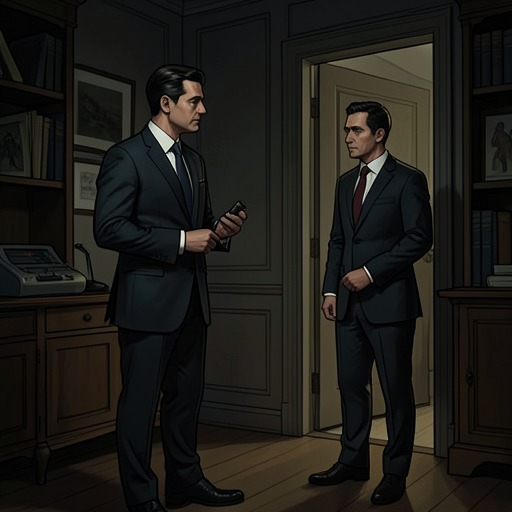
The clearest test comes when Tiger challenges James Bond to Scissors, Paper, Stone. The rules are simple: each player chooses a symbol, and the winner is the one who correctly anticipates the other’s choice. Yet once Tiger lays his fist on the table opposite Bond, the room’s silence and the seriousness of Tiger’s expression transform the children’s game. Bond recognizes that a loss might matter to Tiger in front of the two women, and that news of the defeat could spread beyond the room. What would be an insignificant mishap in Bond’s imagined London club becomes a possible public injury to a powerful host.
Tiger makes the conflict explicit. Because he is the host and Bond the honored guest, good manners would ordinarily require him to let Bond win. He says he must ask forgiveness in advance for defeating him. The courtesy itself creates a dilemma: a genuine victory could cost Tiger face, but a deliberate loss could insult Bond by treating him as unworthy of a serious contest. Nor can Bond simply lose tactfully. Since the game depends on reading and countering an opponent’s choice, losing on purpose requires the same difficult calculation as winning. The scene turns face into a problem of reciprocal recognition: each man must take the other seriously while avoiding a result that humiliates him.
Bond refuses to accept a staged defeat. He tells Tiger that it would be insulting if Tiger tried to lose, then escalates their familiar cultural banter by boasting that he will defeat him and proclaim British superiority. The narration notes that Bond has committed himself, encouraged perhaps by the sake. But the sudden glitter in Tiger’s eyes makes him reconsider the risk of pressing too hard. Their teasing has a real edge because the contest is not detached from status, friendship, or the political work that brought Bond to Japan. The excerpt establishes the stakes of the game, rather than resolving them: its importance lies in how carefully both men must negotiate the possibility of winning.
Face, Obligation, and the Mission
Henderson distinguishes face from ON, the obligation incurred when one person receives a favor from another. He says Tiger has acquired an ON toward him through their friendship and shared pleasures, and that such an obligation is difficult to discharge honorably. A salmon should be repaid with an equally large or larger salmon, not a shrimp; otherwise the exchange remains unbalanced. Face concerns public standing in the game scene, while ON describes a continuing debt between people. The concepts are related in the novel’s account of honor, but they are not interchangeable.
Henderson says Tiger has paid parts of his debt through intelligence information and by granting James Bond an interview soon after his arrival. An ordinary petitioner might have waited weeks. The prompt meeting is therefore more than administrative convenience: Henderson interprets it as a substantial favor in an existing relationship, one that leaves Bond with a corresponding need to offer something adequate in return. He warns that Bond is accumulating ON toward Tiger and will need a sufficiently large present if the two sides are to balance their accounts.
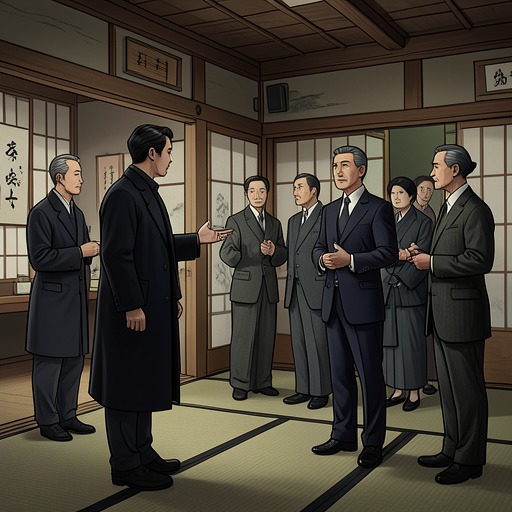
That account helps explain why face matters to the mission as well as to private friendship. The weeks pass without significant progress, while James Bond, Tiger, and Henderson grow close outside working hours. Henderson believes Tiger would regard it as dishonorable to lead Bond on and then reject him flatly; he also says Tiger has a broad face, meaning that he has considerable power as a fixer. Yet the matter remains with Tiger’s superiors, and the information and access already granted increase the weight of what Bond owes. Courtesy, trust, and intelligence exchange form a connected negotiation, not separate concerns.
Narrative Significance
Face is presented through scenes of observation: the women assess Bond’s drinking, Tiger watches him across the game table, and Bond tries to read what his friend’s expression signifies. The concept is therefore dramatic as well as explanatory. A flask, a bow, a fist resting on a table, or a delay in granting an interview can carry meaning because others witness and interpret the act. Bond’s uncertainty about how much a small defeat matters keeps the scene’s cultural difference active rather than resolving it into a rule he already understands.
The novel’s explanation is mediated chiefly through Henderson, who translates Japanese customs for a British visitor in a blunt, comic register. His guidance is practical, but the text also shows that Bond cannot master the situation simply by memorizing etiquette: the game requires judgment about what Tiger would consider respectful, and even deliberate courtesy may become an insult. Face thus marks the limits of Bond’s familiar assumptions about winning, losing, and trivial embarrassment. In the developing friendship, attention to those limits becomes part of the work of earning trust.